
Networks Guided Reading Activity: An Overview
Networks Guided Reading fosters crucial social studies skills through structured exploration of texts, aiding comprehension and critical thinking within a collaborative setting.
This approach empowers students to actively engage with content, building a strong foundation for historical, geographical, and economic understanding.
It’s a dynamic process designed to enhance learning and promote deeper insights into the complexities of our world, utilizing McGraw Hill resources.
What is Networks Guided Reading?
Networks Guided Reading is a carefully orchestrated instructional approach designed to support students as they navigate complex social studies texts. It’s a small-group activity where the teacher provides scaffolding, prompting students to actively decode, comprehend, and analyze the material.
Unlike independent reading, Networks Guided Reading offers a supportive environment for students to practice essential reading strategies. The teacher strategically selects texts aligned with students’ instructional reading levels, ensuring a balance between challenge and accessibility.
Through focused discussions and targeted questioning, students deepen their understanding of key concepts, develop critical thinking skills, and build confidence in their ability to engage with social studies content. It’s a powerful tool for fostering literacy and content mastery within the Networks program.
The Purpose of Guided Reading in Social Studies
Guided Reading within the context of Social Studies, particularly utilizing the Networks program, serves a vital purpose: to cultivate historically literate and engaged citizens. It moves beyond rote memorization, fostering a deeper comprehension of past events, geographical contexts, and economic systems.
The primary goal is to equip students with the analytical skills necessary to interpret primary and secondary sources, evaluate different perspectives, and construct informed opinions. It encourages critical thinking about the forces that shape our world.

Through strategic questioning and collaborative discussion, Networks Guided Reading empowers students to become active learners, capable of connecting historical knowledge to contemporary issues and participating meaningfully in civic life.

McGraw Hill Networks Program
McGraw Hill’s Networks is a comprehensive social studies curriculum designed to engage students with interactive resources and build essential skills for success.
Core Components of the Networks Program
Networks centers around a robust student edition, providing core content and engaging visuals to support learning. Teacher Editions offer detailed lesson plans, differentiated instruction strategies, and assessment tools to facilitate effective guided reading sessions.
Student Workbooks reinforce concepts with practice activities, while Digital Resources – accessible through McGraw Hill’s platform – offer interactive maps, primary source documents, and simulations. These components work synergistically to create a dynamic learning experience.
Guided reading is seamlessly integrated, utilizing these resources to foster comprehension, critical thinking, and collaborative discussion. The program emphasizes building historical understanding and analytical skills through carefully selected texts and activities.
Networks: A Social Studies Curriculum
Networks is a comprehensive social studies curriculum designed to engage students in meaningful exploration of history, geography, economics, and civics. It utilizes a thematic approach, connecting concepts across disciplines to foster a holistic understanding of the world.
Guided reading activities are central to this curriculum, providing structured opportunities for students to analyze primary and secondary sources, develop critical thinking skills, and participate in collaborative discussions.
The program’s resources, including student editions, teacher materials, and digital tools, support differentiated instruction and cater to diverse learning needs, ensuring all students can succeed in mastering key social studies concepts.

Key Concepts in Networks Guided Reading
Networks Guided Reading emphasizes core social studies concepts like geographic relationships, historical connections, and economic systems, fostering analytical skills and deeper understanding.
Understanding Geographic Relationships
Networks Guided Reading powerfully illuminates how geography shapes societies and historical events. Students learn to analyze maps, identify key physical features, and understand their impact on population distribution and economic activities.
Through focused reading and discussion, they explore concepts like climate zones, natural resources, and how these factors influence cultural development and trade routes.
The program encourages students to consider how location affects a region’s vulnerability to natural disasters and its strategic importance throughout history.
By examining spatial relationships, students develop a nuanced understanding of how people interact with and are influenced by their environment, fostering critical thinking skills.
Analyzing Historical Connections
Networks Guided Reading expertly guides students in dissecting historical narratives and identifying crucial connections between events, people, and ideas. The program emphasizes examining primary and secondary sources to build a comprehensive understanding of the past.
Students learn to recognize cause-and-effect relationships, trace the evolution of societies, and evaluate the impact of significant turning points in history.
Through collaborative discussions and targeted questioning, they develop skills in historical analysis, interpretation, and contextualization.
This approach fosters a deeper appreciation for the complexities of the past and its relevance to the present, promoting informed citizenship.
Exploring Economic Systems
Networks Guided Reading provides a structured framework for students to investigate diverse economic systems – from traditional economies to modern capitalism and socialism.
The program facilitates understanding of key concepts like supply and demand, scarcity, trade, and globalization through accessible texts and engaging activities.
Students analyze how economic choices impact individuals, communities, and nations, fostering critical thinking about economic policies and their consequences.
Guided discussions encourage students to evaluate the strengths and weaknesses of different systems, promoting economic literacy and informed decision-making.
This exploration builds a foundation for understanding the interconnectedness of the global economy.

Strategies for Effective Guided Reading
Networks Guided Reading thrives on strategic pre-reading, focused questioning during reading, and thoughtful post-reading discussions to maximize comprehension and engagement.
Pre-Reading Activities & Activation of Prior Knowledge
Networks Guided Reading significantly benefits from robust pre-reading activities designed to activate students’ existing knowledge and build anticipation for the text. Begin by brainstorming what students already know about the topic, fostering a sense of ownership and relevance.
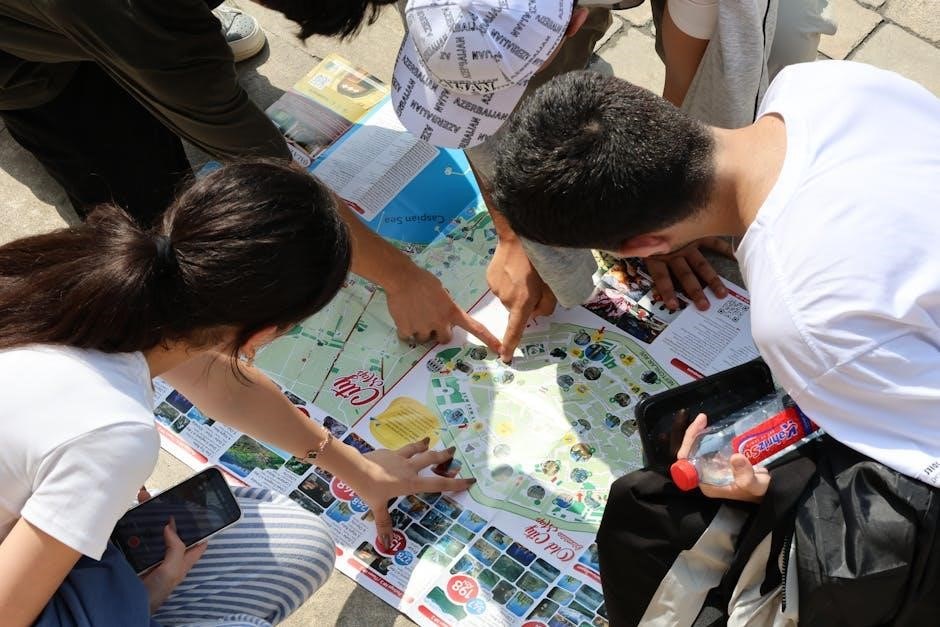
Utilize visual aids like maps, images, or timelines to provide context and spark curiosity. Consider “think-pair-share” activities where students discuss initial thoughts with a partner before sharing with the larger group.
Previewing key vocabulary terms and concepts is crucial, ensuring students aren’t hindered by unfamiliar language. Pose open-ended questions that encourage prediction and critical thinking, setting a clear purpose for reading.
These strategies prime students for deeper comprehension and engagement with the Networks curriculum.
During-Reading Questioning Techniques
Networks Guided Reading thrives on strategic questioning that promotes active reading and deeper comprehension. Employ a mix of question types – literal, inferential, and evaluative – to challenge students at various cognitive levels.
Start with clarifying questions to ensure understanding of factual information, then move towards questions that require students to draw inferences and make connections.
Encourage students to support their answers with evidence from the text, fostering analytical skills.
Utilize “think alouds” to model your own thought process as a reader. Pause periodically to check for understanding and redirect students if needed.
Effective questioning transforms reading into a dynamic, interactive experience within the Networks program.
Post-Reading Discussion & Summarization
Networks Guided Reading culminates in robust post-reading discussions and summarization activities. Facilitate a student-led conversation, encouraging them to share interpretations, analyze key themes, and connect the text to their prior knowledge.
Prompt students to synthesize information and articulate the main ideas in their own words. Implement structured summarization techniques like “Somebody Wanted But So Then” to aid recall and comprehension.
Encourage respectful debate and the sharing of diverse perspectives.
Extend the discussion by asking students to predict future events or consider the broader implications of the content within the Networks curriculum.
This solidifies understanding and promotes critical thinking skills.

Utilizing Program Resources
Networks provides extensive resources – teacher editions, student workbooks, and digital tools – to support guided reading and enhance student engagement effectively.
Teacher Editions & Support Materials
Teacher Editions for the Networks program are meticulously crafted to provide comprehensive support for implementing guided reading activities. These editions include detailed lesson plans specifically designed to facilitate meaningful discussions and comprehension checks during reading sessions.
They offer differentiated instruction strategies, catering to diverse learner needs within the classroom. Furthermore, the support materials encompass a wealth of resources like assessment tools, graphic organizers, and vocabulary support to bolster student understanding.
These materials streamline preparation and empower educators to confidently lead engaging and effective guided reading experiences, maximizing the benefits of the Networks curriculum for all students. Access to these resources is available through McGraw Hill’s program support website.
Student Workbooks & Practice Activities
Student Workbooks accompanying the Networks program are integral to reinforcing concepts introduced during guided reading. These workbooks provide targeted practice activities that directly correlate with the textbook content, solidifying comprehension and skill development.
Activities range from map work and timeline creation to analyzing primary sources and responding to critical thinking prompts, all designed to enhance engagement. They offer opportunities for independent practice and assessment, allowing students to demonstrate their understanding of key social studies themes.
These resources are designed to complement guided reading sessions, fostering a deeper and more lasting grasp of the material presented within the Networks curriculum.
Digital Resources & Interactive Tools
Digital resources significantly enhance the Networks guided reading experience, offering interactive tools that cater to diverse learning styles. McGraw Hill provides online access to a wealth of supplementary materials, including interactive maps, primary source documents, and engaging video clips.
These tools allow students to explore concepts in a dynamic and visually stimulating way, fostering deeper understanding and retention. Interactive timelines and simulations bring history to life, while digital assessments provide immediate feedback on student progress.
These resources seamlessly integrate with guided reading lessons, creating a blended learning environment that maximizes student engagement and achievement.

Assessment & Differentiation
Formative assessment during guided reading informs instruction, while differentiation strategies address varied learning needs, ensuring all students access challenging content.
Formative Assessment During Guided Reading
Formative assessment is integral to the Networks Guided Reading process, providing ongoing feedback to both students and the teacher. Observing student participation during discussions reveals comprehension levels and areas needing clarification.
Strategic questioning, both during and after reading, allows teachers to gauge understanding of key concepts and historical connections. Quick checks, like exit tickets or brief written responses, offer immediate insights into student learning.
Monitoring individual reading fluency and accuracy also provides valuable data. This continuous assessment loop informs instructional adjustments, ensuring targeted support for struggling learners and enrichment for advanced students, maximizing the impact of the Networks program.
Utilizing observations and responses, teachers can tailor subsequent guided reading sessions to address specific needs.
Differentiated Instruction for Diverse Learners
Networks Guided Reading readily supports differentiated instruction to meet the varied needs of learners. For struggling readers, provide pre-teaching of vocabulary and simplified text versions, alongside graphic organizers.
English Language Learners benefit from paired reading, sentence stems, and visual aids to enhance comprehension. Advanced learners can engage in extension activities, such as research projects or debates, exploring topics in greater depth.
Flexible grouping allows teachers to tailor instruction based on skill level and learning style. Utilizing the Networks program’s resources, teachers can modify assignments and provide individualized support, ensuring all students access challenging and meaningful content.
This approach fosters inclusivity and maximizes learning potential for every student.

Common Challenges & Solutions
Common challenges in Networks Guided Reading include comprehension issues and group dynamics; solutions involve targeted support and structured discussions.
Addressing these proactively ensures all students benefit from collaborative learning and achieve reading success within the program.
Addressing Reading Comprehension Difficulties
Reading comprehension difficulties within Networks Guided Reading often stem from unfamiliar vocabulary or complex sentence structures inherent in social studies texts.
Effective strategies include pre-teaching key terms, breaking down passages into smaller chunks, and utilizing graphic organizers to visually represent information.
Teachers should model proficient reading strategies, such as making predictions and asking clarifying questions, to empower students.
Scaffolding instruction with differentiated texts and providing targeted support during reading are crucial.
Encouraging students to re-read challenging sections and engage in peer discussions can also significantly improve understanding and retention of the material.
Regular formative assessments help pinpoint specific areas where students struggle, allowing for timely intervention and personalized learning.
Managing Group Dynamics
Effective group dynamics are vital for successful Networks Guided Reading sessions, ensuring all students actively participate and benefit from collaborative learning.
Establishing clear expectations for respectful communication and equal contribution is paramount from the outset.
Assigning specific roles within each group – such as discussion leader, summarizer, or questioner – promotes accountability and engagement.
Teachers should circulate, observing group interactions and providing gentle guidance when needed, fostering a supportive environment.
Addressing dominant personalities and encouraging quieter students to share their perspectives are key to equitable participation.
Regularly reflecting on group processes helps students develop essential social skills alongside their content knowledge.

Extending Learning Beyond the Textbook
Networks Guided Reading connects classroom learning to real-world events and encourages project-based activities, fostering deeper understanding and critical application of knowledge.
Real-World Connections & Current Events
Networks Guided Reading truly shines when bridging textbook concepts to contemporary issues. Encourage students to analyze current events through the lens of historical patterns and geographic influences explored in the curriculum.
For example, discussions about global trade can be enriched by examining current supply chain disruptions or international economic policies. Analyzing news articles related to political conflicts allows students to apply their understanding of historical precedents and geopolitical relationships.
Facilitate debates on pressing social issues, prompting students to utilize evidence from their readings to support their arguments. This fosters critical thinking and demonstrates the relevance of social studies to their lives, solidifying comprehension and engagement.
Project-Based Learning Opportunities
Networks Guided Reading provides a strong foundation for engaging project-based learning (PBL) activities. Students can apply their knowledge by creating documentaries exploring historical events, designing interactive maps illustrating geographic relationships, or developing economic simulations.
Consider assigning research projects focused on specific cultures or regions, requiring students to synthesize information from multiple sources. Encourage collaborative projects where students assume roles – historians, economists, geographers – to present a comprehensive analysis of a chosen topic.
These PBL experiences deepen understanding, foster creativity, and develop essential 21st-century skills like collaboration, communication, and critical thinking, extending learning beyond the textbook.