
Residential deck construction demands adherence to detailed guidelines, ensuring structural integrity and safety for homeowners; these prescriptive guides are vital․
Following a prescriptive guide, like the IRC, simplifies the building process, offering clear instructions for footings, joists, and railings․
ICC Digital Codes provides model codes used globally, promoting safe, sustainable, and resilient structures, while the UCC aims for uniform safety standards․
Importance of Following a Prescriptive Guide
Prescriptive guides in residential deck construction aren’t merely suggestions; they are foundational to ensuring safety, structural soundness, and legal compliance․ Deviating from established codes, such as those outlined in the International Residential Code (IRC), can lead to catastrophic failures, potential injuries, and costly legal ramifications․ These guides detail specific requirements for footing depth, joist sizing, beam spans, and railing heights, all meticulously calculated to withstand anticipated loads and environmental factors․
Employing a prescriptive approach streamlines the building process, offering clear, step-by-step instructions that minimize ambiguity and reduce the risk of errors․ This is particularly crucial for homeowners undertaking DIY projects or working with less experienced contractors․ Furthermore, adherence to these guidelines facilitates a smoother inspection process, as building inspectors rely on these codes to verify compliance and ensure the deck meets established safety standards․ Resources like ICC Digital Codes and the ANSI deck safety guide provide invaluable support in understanding and implementing these requirements effectively․
Scope of this Guide: Focus on Safety and Code Compliance
This guide concentrates on the practical aspects of building a safe and code-compliant residential deck, adhering strictly to prescriptive construction methods․ It prioritizes the IRC (International Residential Code) and relevant sections of the UCC (Uniform Construction Code), offering detailed instructions for each stage of the building process – from foundation and framing to decking and railings․ The primary objective is to equip builders and homeowners with the knowledge to construct a durable, structurally sound deck that minimizes risk․
We will not delve into complex engineering calculations or alternative construction techniques․ Instead, the focus remains firmly on established best practices and readily available resources like those provided by ICC Digital Codes and the American Wood Council․ This guide emphasizes understanding and implementing specific requirements for footing dimensions, joist spacing, handrail heights, and guardrail strength, ensuring full compliance with local building regulations and promoting a safe outdoor living space for years to come․

Planning and Permitting
Careful planning and securing permits are crucial before starting any deck project; detailed site plans and adherence to local building codes are essential․
Obtaining Necessary Permits
Before commencing deck construction, securing the required permits from your local building department is absolutely essential; failing to do so can result in costly fines and project delays․
The permitting process typically involves submitting detailed plans, including a site plan showcasing the deck’s location on your property, dimensions, and proximity to property lines․
Permit applications often require specifications for footing depth and diameter, joist sizing and spacing, beam construction, and railing details, all aligning with the International Residential Code (IRC) or the Uniform Construction Code (UCC)․
Be prepared to demonstrate compliance with safety regulations regarding handrail height and spacing, guardrail post strength, and stair construction if applicable; inspectors will verify these aspects during the inspection process․
Contact your local building department early in the planning phase to understand specific requirements and streamline the permit acquisition process, ensuring a smooth and compliant build․
Site Plan Requirements and Considerations
A comprehensive site plan is a crucial component of the permit application process, providing a detailed overview of your property and the proposed deck’s placement․
This plan must accurately depict property lines, existing structures (house, sheds, fences), easements, and the deck’s footprint, including dimensions and orientation․
Considerations include maintaining required setbacks from property lines, ensuring adequate clearance around utilities (gas, electric, water), and accounting for drainage patterns to prevent water damage․
The site plan should also illustrate the location of footings and their relationship to existing structures, demonstrating compliance with local building codes regarding foundation requirements․
Accurately representing the slope of the land is vital, as it impacts footing depth and potential need for retaining walls; a professionally prepared survey may be necessary for complex sites․
Understanding Local Building Codes (IRC & UCC)
Navigating local building codes is paramount for safe and compliant deck construction; the International Residential Code (IRC) is widely adopted, offering specific guidelines․

The IRC details requirements for joist spans, beam sizing, footing depths, and railing heights, ensuring structural integrity and occupant safety․ Familiarize yourself with the applicable version in your jurisdiction․
The Uniform Construction Code (UCC), implemented in some areas, aims for consistent safety standards across all building types, including residential decks․
Understanding the interplay between the IRC and any local amendments is crucial; municipalities often modify the IRC to address regional conditions or preferences․
Resources like ICC Digital Codes provide access to model codes and updates, while local building departments can clarify specific requirements and interpretations․

Foundation and Footings
Footing depth and diameter are critical for deck stability, dictated by local codes and soil load-bearing capacity; proper construction is essential․
Footing Depth and Diameter Specifications
Footing specifications are paramount for a stable and long-lasting deck, directly influencing its ability to withstand environmental loads and usage․ Prescriptive guides, like those found within the International Residential Code (IRC), detail minimum requirements based on factors such as frost depth, soil type, and anticipated deck load․
Generally, footings must extend below the frost line to prevent heaving during freeze-thaw cycles․ This depth varies geographically; consult local building codes for precise requirements․ Diameter specifications depend on the deck’s size and weight․ Larger, heavier decks necessitate wider footings to distribute the load effectively․ Common diameters range from 10 to 12 inches, but may increase significantly for substantial structures․
IRC guidelines provide tables outlining appropriate footing sizes based on beam spans and anticipated loads․ Always prioritize exceeding minimum specifications for added safety and durability․ Proper compaction of the soil within the footing hole is crucial, ensuring a solid base for the deck’s support posts․
Proper Footing Construction Techniques
Footing construction demands meticulous attention to detail, ensuring a solid foundation for the entire deck structure․ Begin by excavating holes to the required depth and diameter, as specified by local building codes and IRC guidelines․ Ensure the base of each hole is level and free of loose debris․
Next, add a gravel base, typically 4-6 inches thick, for improved drainage and compaction․ This layer helps prevent water from pooling around the footing and potentially causing frost heave․ Pour concrete into the hole, filling it to just below grade․ Use a vibrator to consolidate the concrete, removing air pockets and ensuring a dense, strong footing․
Embed post anchors into the wet concrete, ensuring they are properly aligned and secured․ Allow the concrete to cure fully before proceeding with deck framing․ Proper curing—keeping the concrete moist—is vital for achieving maximum strength․ Always verify alignment and levelness before the concrete sets completely․
Soil Considerations and Load-Bearing Capacity
Soil type significantly impacts a deck’s stability; understanding load-bearing capacity is crucial for safe construction․ Sandy or loamy soils require wider and deeper footings compared to dense clay soils․ Before construction, assess the soil’s composition and consult local building codes for specific requirements․
Poor soil conditions may necessitate soil compaction or the use of engineered footings to distribute the deck’s weight effectively․ Ignoring soil characteristics can lead to settling, cracking, or even structural failure․ Always consider the combined weight of the deck, occupants, and potential snow loads when calculating footing size․
A geotechnical investigation can provide detailed information about soil properties and recommended footing designs․ Proper soil preparation and appropriately sized footings are fundamental to a durable and safe deck․ Adhering to IRC guidelines ensures compliance and minimizes risks․

Framing the Deck
Deck framing involves precise joist sizing, beam support calculations, and secure ledger board attachment, all dictated by building codes for safety․
Joist Sizing and Spacing
Joist sizing and spacing are critical components of a structurally sound deck, directly influencing its load-bearing capacity and long-term durability․ Prescriptive residential deck construction guides, like those found within the IRC (International Residential Code), detail specific requirements based on several factors․
These factors include the decking material used – whether it’s pressure-treated lumber, cedar, redwood, or a composite material – and the joist span, which is the distance between supports․ Codes specify allowable spans for different joist sizes to prevent excessive deflection or failure․ Generally, closer joist spacing provides greater support and allows for smaller joist sizes․
Typical spacing ranges from 12 inches to 16 inches on center, but this can vary․ The beam size and support also play a role, as larger beams can support longer joist spans․ Always consult local building codes and span tables to determine the appropriate joist size and spacing for your specific deck design and local conditions, ensuring compliance and safety․
Beam Sizing and Support
Beam sizing and support are fundamental to a deck’s structural integrity, distributing the load from the decking and joists to the footings․ Prescriptive guides, such as the IRC, provide detailed specifications for beam construction based on span length, anticipated loads, and lumber species․
Beam size is typically determined by its span – the distance between supports – and the load it needs to carry․ Larger spans and heavier loads necessitate larger beams․ Common beam construction involves multiple boards fastened together to achieve the required depth and width․ Proper support is equally crucial; beams must rest securely on posts or load-bearing walls․
The number and size of posts supporting a beam depend on the beam’s span and the load it carries․ Codes dictate appropriate post sizes and footing requirements to ensure adequate support․ Always consult span tables and local building codes to determine the correct beam size, support configuration, and footing specifications for a safe and compliant deck․
Ledger Board Attachment to House
Ledger board attachment is a critical connection point, transferring deck loads to the house’s structure․ Improper attachment is a leading cause of deck failures, demanding strict adherence to prescriptive guidelines․ The IRC details specific requirements for fastener type, spacing, and size, based on the ledger board material and the house’s framing․
Directly attaching a ledger board to a house’s rim joist is common, but requires careful consideration․ Fasteners must penetrate deeply into the framing members, typically using lag screws or through-bolts․ Proper flashing is essential to prevent water intrusion and rot․ The ledger board must be level and securely fastened to solid blocking between framing members․
Always verify the house’s framing is adequate to support the deck load․ Consult local building codes and consider professional guidance for complex attachments or unusual framing configurations․ Ignoring these guidelines can compromise the deck’s safety and lead to costly repairs․

Decking Materials and Installation
Decking choices range from pressure-treated wood to composites, each with unique installation needs; follow manufacturer guidelines and local codes carefully․
Proper installation ensures longevity and safety, demanding correct spacing, fastening, and attention to grain direction for optimal performance․
Wood Decking Options (Pressure-Treated, Cedar, Redwood)
Wood decking remains a popular choice, offering natural beauty and affordability, but requires careful consideration of species and treatment․
Pressure-treated lumber, typically Southern Yellow Pine, is chemically treated to resist rot, decay, and insect infestation, making it cost-effective and durable․
However, it necessitates proper fastening with corrosion-resistant hardware and regular maintenance, like cleaning and sealing, to prolong its lifespan․
Cedar, known for its reddish hue and aromatic scent, is naturally resistant to decay and insects, requiring less chemical treatment than pressure-treated pine․
It’s softer than other options, potentially prone to scratches and dents, but offers a beautiful aesthetic and good workability․
Redwood, similar to cedar in its natural resistance, boasts a rich reddish-brown color and exceptional stability, minimizing warping and cracking․
Redwood is generally more expensive than cedar or pressure-treated lumber, but its longevity and aesthetic appeal justify the investment for many homeowners․
Always verify that wood decking is graded for outdoor use and complies with local building codes regarding species and treatment requirements․
Composite Decking Options and Benefits
Composite decking, crafted from a blend of wood fibers and plastic, presents a low-maintenance alternative to traditional wood, gaining significant popularity․
These materials resist rot, decay, insect damage, and splintering, eliminating the need for regular staining, sealing, or painting – a substantial time saver․
Composite decking offers a diverse range of colors, textures, and styles, mimicking the appearance of natural wood while providing enhanced durability․
Different types exist, including wood-plastic composites (WPC) and capped composites, with the latter offering superior stain and fade resistance․
Capped composites feature a protective polymer shell, shielding the core from the elements and enhancing longevity․
While generally more expensive upfront than pressure-treated wood, the reduced maintenance and extended lifespan often result in long-term cost savings․
Proper installation is crucial; follow manufacturer’s instructions regarding spacing, fastening, and ventilation to prevent warping or moisture buildup․
Ensure the chosen composite decking meets local building code requirements and carries appropriate certifications for safety and performance․
Proper Decking Installation Techniques
Decking installation demands precision to ensure a safe, durable, and aesthetically pleasing result; adherence to best practices is paramount․
Begin by acclimating the decking boards to the job site’s temperature and humidity for several days to minimize expansion and contraction issues․
Maintain consistent spacing between boards, typically 1/8 to 1/4 inch, to allow for natural movement and prevent buckling․
Use appropriate fasteners – screws are generally preferred over nails – and follow the manufacturer’s recommendations for screw type and placement․
Stagger end joints for a more visually appealing and structurally sound deck surface, avoiding continuous seams across multiple boards․
Pre-drilling holes, especially with hardwood decking, prevents splitting and ensures secure fastening․
Ensure boards are straight and level during installation, utilizing a level and shims as needed to correct any imperfections in the framing․
Regularly check for squareness and alignment throughout the process to maintain a professional finish․

Railings and Safety Features
Deck railings are crucial safety components, requiring specific heights and spacing per codes; guardrail posts must withstand significant force․
Handrail dimensions and stair railing construction must strictly adhere to building codes, ensuring occupant protection and preventing falls․

Handrail Height and Spacing Requirements
Handrail height is a critical safety factor in deck construction, dictated by the International Residential Code (IRC) to prevent accidental falls․ Generally, residential deck handrails must be no less than 36 inches in height, measured vertically from the walking surface․ However, for stairs, this requirement increases to a minimum of 34 inches measured vertically from the stair nosing․

Beyond height, the spacing between balusters – the vertical posts supporting the handrail – is equally important․ The IRC mandates that the space between balusters cannot exceed 4 inches to prevent a sphere with a diameter of 4 inches from passing through․ This prevents children from squeezing through and potentially falling off the deck․
These requirements are not merely suggestions; they are legally enforceable standards designed to protect occupants․ Inspectors meticulously check handrail height and baluster spacing during deck inspections to ensure code compliance․ Deviations from these standards will result in code violations and require correction before the deck can be approved for use․ Adhering to these specifications is paramount for a safe and legally sound deck․
Guardrail Post Installation and Strength
Guardrail post installation is fundamental to deck safety, demanding robust construction techniques to withstand significant force․ Posts must be securely anchored to the deck framing, typically using through-bolts, lag screws, or specialized post anchors designed for deck applications․ Proper fastening ensures the posts resist both upward and lateral loads․
The strength of guardrail posts is directly related to their size and how they are connected․ The IRC specifies minimum post dimensions based on deck height and anticipated loads․ Typically, 4×4 posts are sufficient for lower decks, while taller decks may require 6×6 posts for increased stability․
Furthermore, posts should be adequately braced to prevent swaying or collapse․ Diagonal bracing or solid blocking between posts significantly enhances their structural integrity․ Inspectors prioritize verifying secure post connections and adequate bracing during deck inspections, ensuring the guardrail system can effectively protect against falls․ Ignoring these details can lead to dangerous structural failures․
Stair Railing Construction and Code Compliance
Stair railing construction requires meticulous attention to detail, as it’s a critical safety component of any deck with stairs․ Code compliance, dictated by the IRC, centers around handrail height, graspability, and the spacing between balusters․ Handrails must be continuous along the stairs and any adjacent landings, providing a secure grip for users․
Typically, handrails should be between 34 and 38 inches above the stair nosing․ Balusters must be spaced no more than 4 inches apart to prevent children from squeezing through․ The strength of the railing system is paramount; posts supporting the railing must be robustly connected to the stair stringers․
Code compliance also extends to the stair stringers themselves, ensuring they are adequately sized and supported․ Inspectors carefully examine these aspects during deck inspections, verifying adherence to safety standards․ Proper stair railing construction minimizes the risk of falls and ensures safe access to and from the deck․
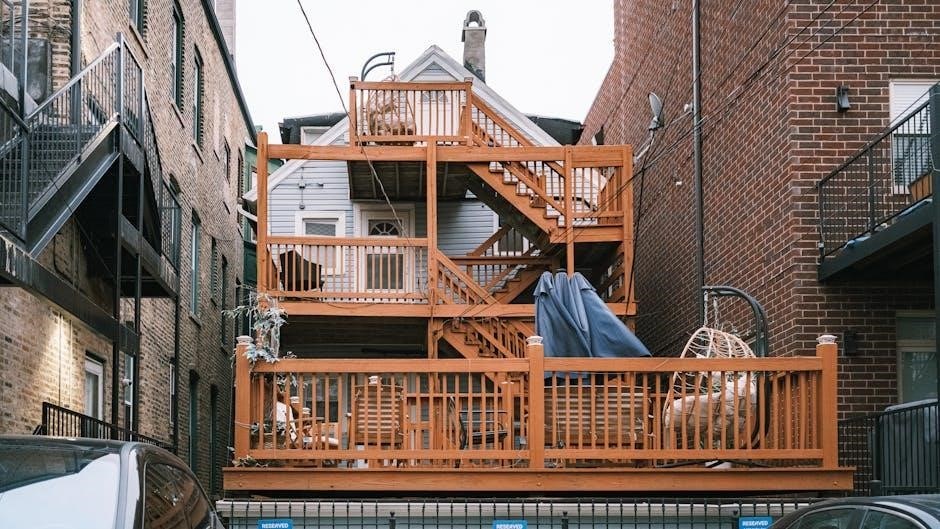
Deck Inspections and Code Adherence
Deck inspections verify structural integrity and safety, focusing on footings, railings, and ledger board attachment; code adherence is crucial for homeowner protection․
Common Deck Inspection Points
Deck inspections meticulously examine several critical areas to ensure compliance with building codes and, most importantly, safety․ Inspectors will thoroughly assess the footings, verifying proper depth, diameter, and construction techniques as outlined in the IRC․ They’ll scrutinize the ledger board attachment to the house, checking for appropriate fasteners and secure connection, a frequent point of failure․
Joist sizing and spacing are carefully reviewed to confirm they meet prescriptive requirements for the deck’s span and load-bearing capacity․ Beam support is also evaluated, ensuring adequate size and proper connections․ Railings undergo rigorous inspection, focusing on handrail height and spacing, as well as the strength and secure installation of guardrail posts․ Any visible signs of decay, insect damage, or improper materials will trigger further investigation․
Inspectors also verify that stairs, if present, adhere to stair railing construction and code compliance standards, ensuring safe access․ Documentation, such as approved site plans and permits, may be requested to confirm the project’s legitimacy and adherence to local regulations․
Addressing Code Violations
Code violations discovered during a deck inspection require prompt and effective remediation․ The inspector will typically issue a notice outlining the specific deficiencies and a timeframe for correction․ Common violations often involve improper ledger board attachment, insufficient joist sizing, inadequate railings (height or spacing), or incorrect footing construction․
Homeowners have several options for addressing these issues․ They can self-correct, provided they possess the necessary skills and knowledge of the IRC and local building codes․ Alternatively, hiring a qualified contractor experienced in residential deck construction is highly recommended․ A re-inspection is usually required to verify that the corrections have been made to the inspector’s satisfaction․
Failure to address code violations can result in fines, stop-work orders, or even legal action․ Utilizing resources like ICC Digital Codes and consulting with local building officials can facilitate a smooth and compliant resolution process, ensuring a safe and structurally sound deck․
Resources for Building Code Information (ICC Digital Codes, ANSI)
Navigating residential deck construction requires access to reliable building code information․ ICC Digital Codes stands as the foremost provider of model codes, offering comprehensive access to the International Residential Code (IRC) and related standards․ Their platform allows users to search, view, and download codes crucial for compliant deck building, including specifics on footings, joists, and railings․
The American National Standards Institute (ANSI) also plays a vital role, highlighting initiatives focused on building safety․ Organizations like the American Wood Council, through ANSI, publish guides promoting deck safety and best practices․ These resources often detail proper construction techniques and material specifications․
Furthermore, local building departments are invaluable sources of information regarding amendments to the IRC and specific local requirements․ Utilizing these resources ensures projects adhere to all applicable regulations, promoting safety and structural integrity․